


Happy Monday Peaceniks. Ready to go viral?
As much as Scott Galloway hates social media, unlike so many of his contemporaries, he understands that, today, there is no “Media” without “Social Media.” In fact, as Galloway’s reach on social platforms has risen, paid advances for his books have climbed along with it.
[My entire conversation with Galloway is at the very bottom of this piece.]
Prof G’s hot take is reinforced - in droves - by a new, exclusive survey of US consumers I did this month, with my partners at MX8 Labs.
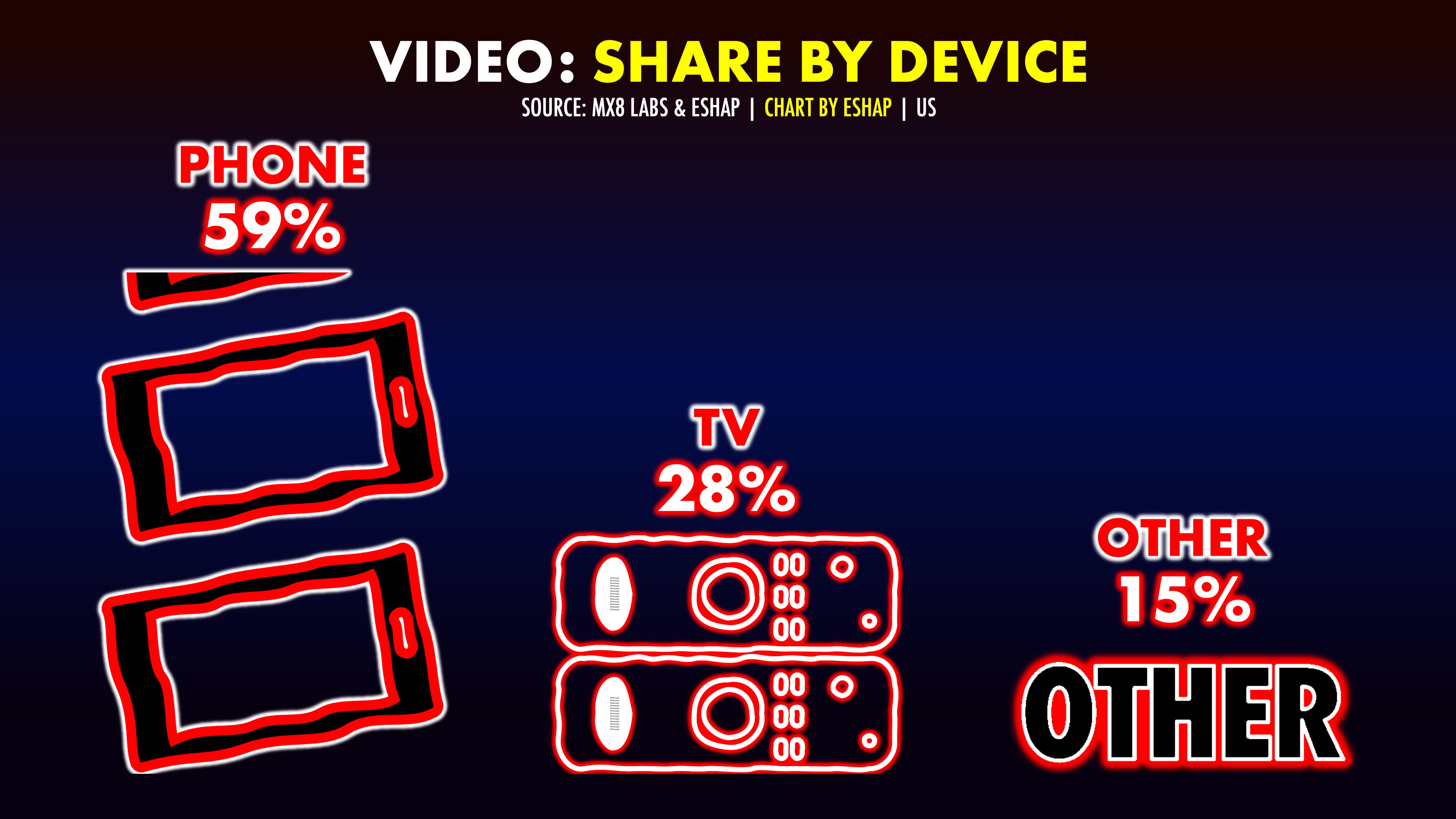
Consumers now say that the device they use most to watch video is not the TV, but rather the phone - more than 2 to 1.
That’s for the whole general population. When you break it down by generation, the gap is even more dramatic…
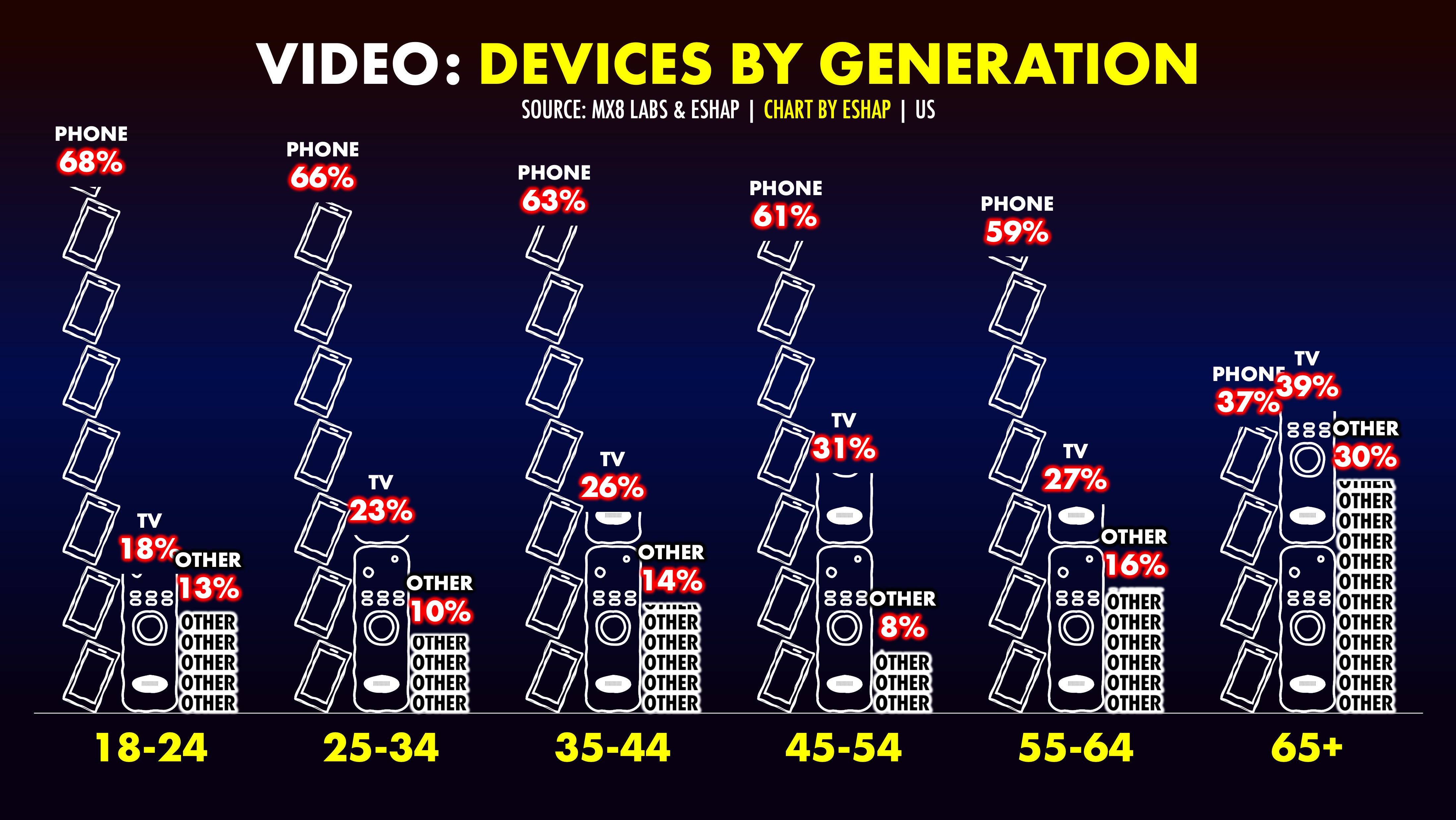
The only generation who uses the television for video more than the phone are people born before the invention of the TV. Two-thirds of Gen Z (more than 3 to 1) use their phones for video more than their TVs - and the phone wins with 63% of Millennials and 59% of Gen X.
Contrary to the conventional wisdom of the Media elite, the living room is not the only place we consume our entertainment. We asked consumers to rank their Top Three Places to watch video. The answers may surprise you.
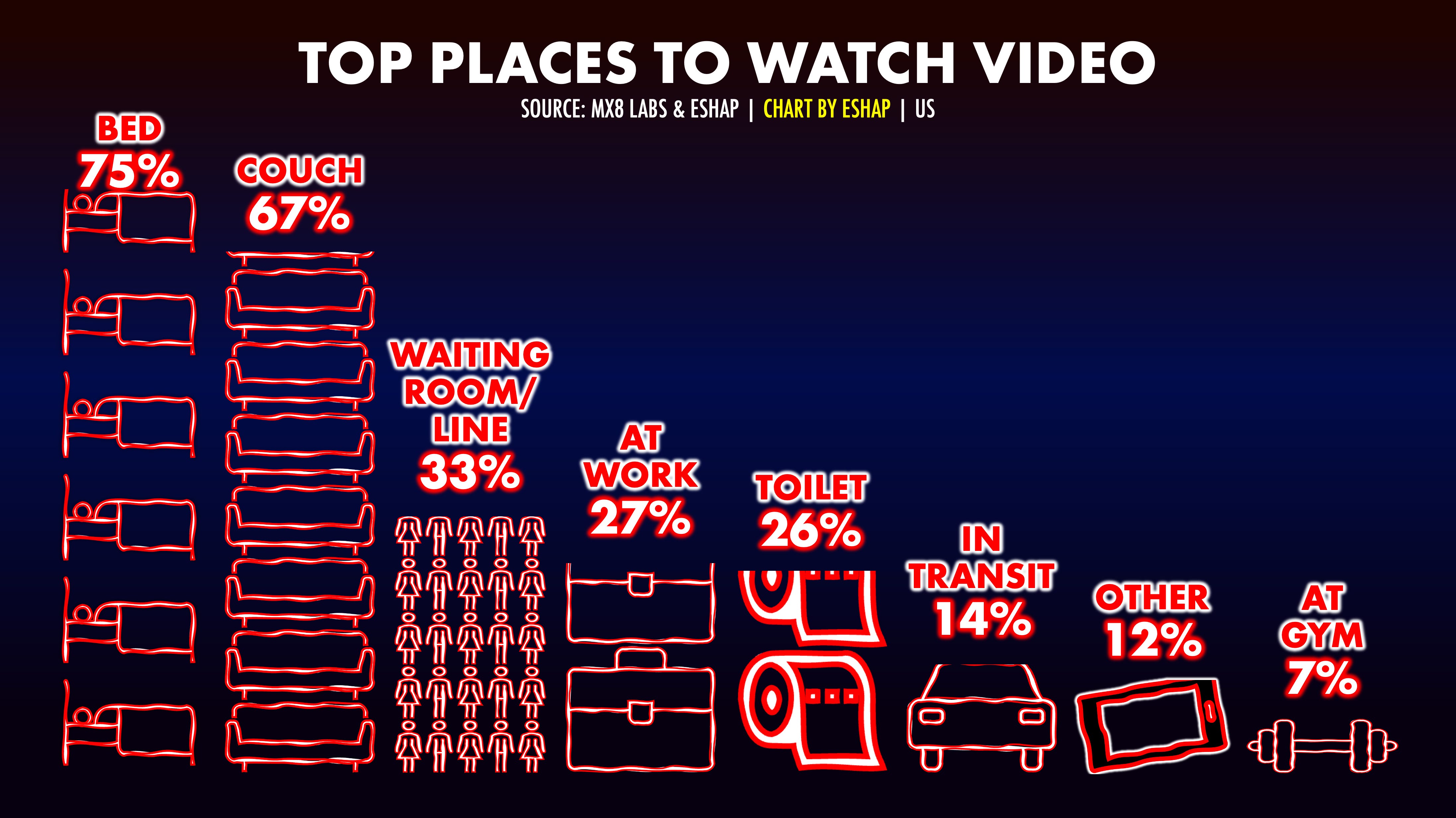
(NOTE: In the first iteration of this survey, we omitted “Bed” as a choice. So we reissued the survey and included the bedroom in our list. BTW, this is the huge advantage of working with MX8: We were able to turn this new survey around in just one week.)
“Bed” is THE #1 place that consumers say they consume video, beating the couch/living room handily. And while many people do have TVs in the bedroom, a LOT of us watch on our phones in bed.
More importantly, the places we watch video is now a wide-ranging spectrum. Yes, two-thirds of us say the couch is a preferred location for video consumption. But one-third of us rank “waiting on line or in an office lobby” in the top three, more than one-quarter rank “Work” and “The Toilet” atop their lists.
This picture gets even more complicated when we look at the viewing habits of our most voracious Media consumers, Gen Z.
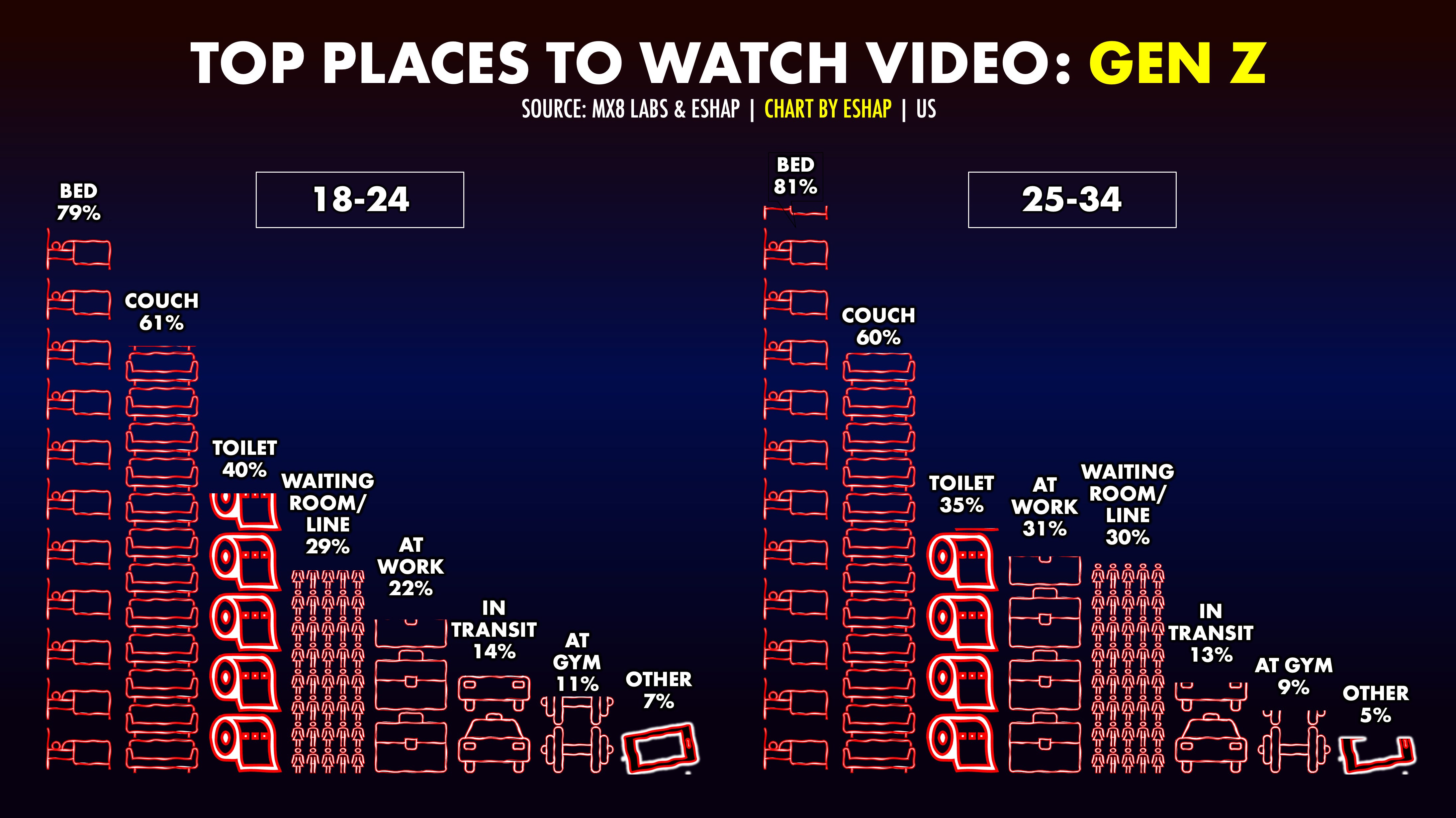
“Bed” beats “Couch” even more handily among Gen Z, with “Toilet” jumping to #3 in the rankings - 40% of A18-24 and more than one-third of A25-34 rank the WC in the top three places they watch video regularly. (So, when a Gen Z in your life sends you a video to watch, know they very well may be in the head.)
Think about yourself: Is your smartphone the first thing you touch in the morning? Is it the last thing you touch at night? (Be honest.) As depressing a thought as this may seem, it is simply the new truth - our phones are now the touchstones of our lives and remote control of our lifestyles.
Returning to Prof G’s point: The very definition of “leisure-time” content consumption has changed drastically in the last ten years. What mainstream Media C-Suites seem to misunderstand, is that “content” is no longer defined by Hollywood, but rather by the audiences themselves.
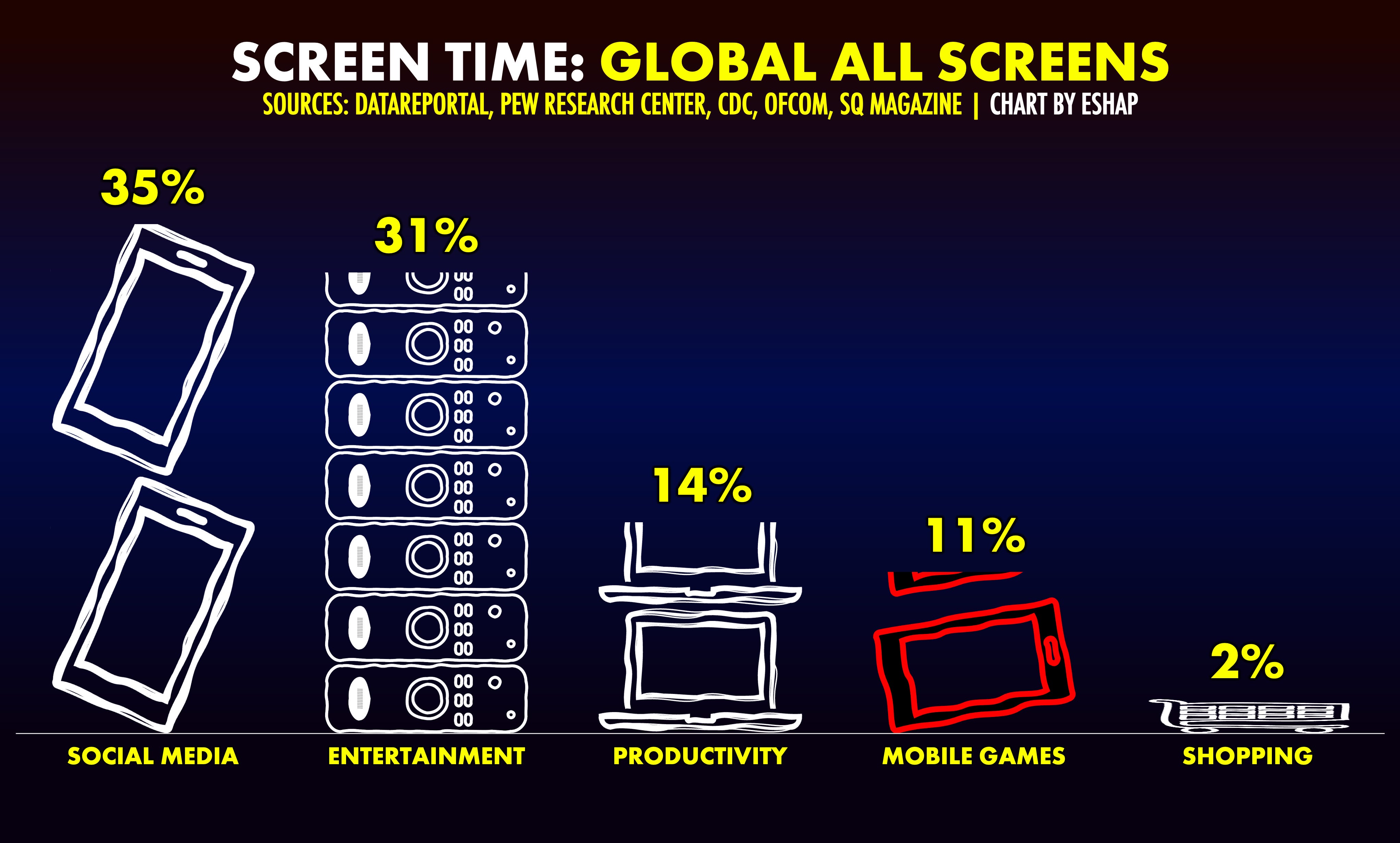
According to data collected by SQ, Social Media now outpaces traditional “entertainment” for screen time. One third of our time on our screens is spent on social platforms, yet less than one-third on “entertainment.”
So, if you are a publisher, platform, producer, or advertiser, you no longer have the luxury of targeting only the living room, the couch, or even the home. You must see THE WHOLE CONSUMER.

This strange new world perplexes the existing power structure of the entertainment industrial complex. To be fair, it is not easy to transform the way you reach your community in today’s nuanced, fragmented, modern Media ecosystem. It is much harder than in the Media world in which I was raised.
Yet, if you listen to your audience, if you put your community at the center of your business, it is not as hard as it seems either.
AFFINITY ECONOMY CASE STUDIES
Below, you will find three Affinity Economy case studies that I will present next week at the Media Universe Summit at StreamTV in Denver (use Code ESHAP200 for $200 off passes right now, right here). These aren’t hypotheticals: they are specific lessons on moving your brand beyond marketing and into passion.
These companies and brands aren’t running away from the challenges of our radically fragmented Media Universe, they are embracing The Affinity Economy and targeting the WHOLE CONSUMER.
The KitKat Heist
The KitKat Heist is a masterclass on modern brand management. Nestlé, one of the oldest and most traditional packaged goods companies on the planet, turned a fascinating crisis into a viral sensation - by embracing every aspect of their audience and gamifying their entire brand.
Many have speculated that Nestlé staged the crime (it happened on April Fool’s Day). They didn’t. But where many/most brands might have dived headfirst into damage control, KitKat embraced the chaos and invited their Fans to play along - ceding control to the entire internet.
